Varanasi Travel Guide for First-Time Visitors
Plan two to three days in Varanasi. The essentials are the evening Ganga Aarti at Dashashwamedh Ghat, a sunrise boat ride along the ghats, a walk through the old city's lanes and a half-day at Sarnath. Visit between October and March, dress modestly, and treat the cremation ghats with respect.
Why Varanasi Is Different
Varanasi (also called Banaras or Kashi) is one of the world's oldest continuously inhabited cities and Hinduism's holiest. Life, prayer and death all happen openly along the Ganges: pilgrims bathe at dawn, priests perform ceremonies at dusk, and cremations continue day and night at the burning ghats. It is intense, moving and unlike anywhere else on a North India trip, which is why it pairs so well with the monuments of the Golden Triangle.
The Ghats
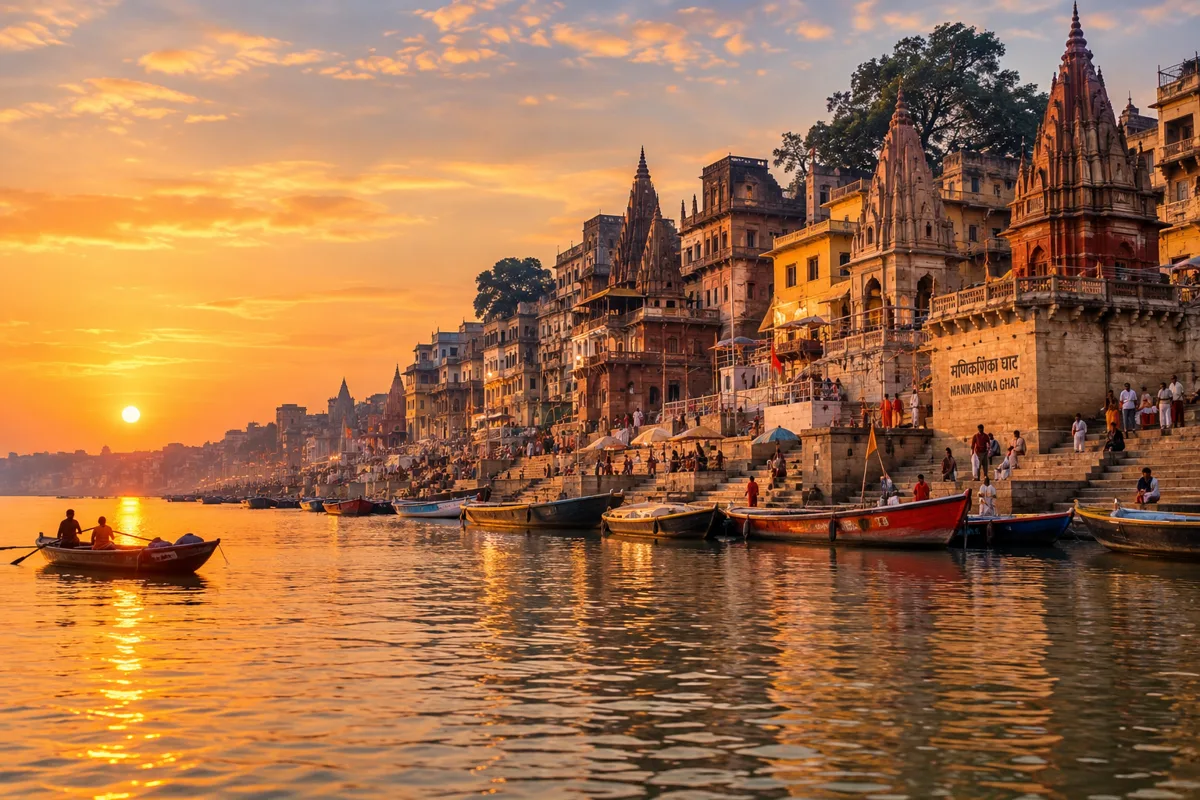
More than 80 ghats, stone steps leading down to the river, line the western bank of the Ganges. A few to know:
- Dashashwamedh Ghat: the busiest ghat and the setting for the main evening Ganga Aarti.
- Manikarnika Ghat: the principal cremation ghat. Visitors may watch respectfully from a distance; photography of cremations is not appropriate.
- Assi Ghat: at the southern end, calmer, with a morning ceremony and cafés nearby.
- Harishchandra Ghat: a second cremation ghat.
The Evening Ganga Aarti
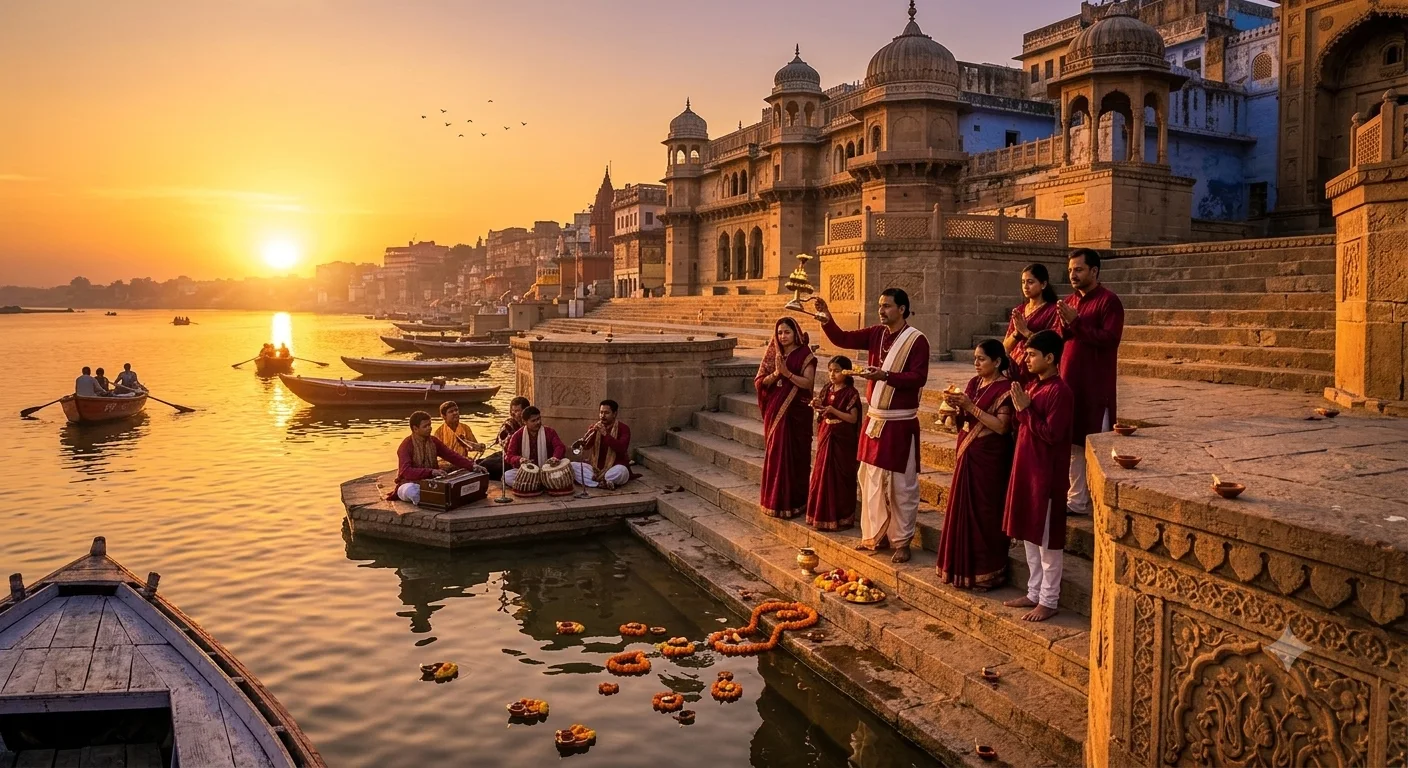
Every evening at Dashashwamedh Ghat, a team of priests performs the Ganga Aarti, a synchronised ceremony of fire, bells, incense and chanting offered to the river. Arrive early for a good spot on the steps, or watch from a boat on the water, which is less crowded. Assi Ghat has its own ceremony at dawn.
Sunrise Boat Ride
A rowing boat along the ghats at sunrise is the most memorable hour in Varanasi. As the light comes up you see pilgrims bathing, yoga on the steps, washing and prayers, with the palaces and temples of the riverfront glowing behind them. It usually lasts about an hour. During the monsoon, high water can restrict or suspend boat rides for safety.
The Old City and Temples
Behind the ghats is a maze of narrow lanes (galis) full of small shrines, sweet shops, silk weavers and cows. A guided walk is the best way to explore without getting lost. The Kashi Vishwanath Temple, dedicated to Shiva, is the city's most important; security is strict and phones, bags and cameras usually have to be left in lockers, so check the current rules before you go. Other notable temples include Sankat Mochan Hanuman and Durga Temple.
Sarnath
About 10 km from Varanasi, Sarnath is where the Buddha gave his first sermon after his enlightenment. The Dhamek Stupa, monastery ruins and the Sarnath Museum, home to the Lion Capital of Ashoka, make a peaceful half-day outing and a good contrast to the intensity of the ghats. Check museum opening days before you go.
How Many Days in Varanasi?
- 2 days (1 night minimum): evening Aarti, sunrise boat ride and the old city.
- 3 days: our recommendation, adding Sarnath and time to simply sit on the ghats and watch the river.
- 4+ days: for photographers, silk-weaving visits, music or yoga.
Best Time to Visit
October to March is the best season, with pleasant days and cool mornings; December and January mornings can be misty, which is atmospheric on the river. April to June is very hot. July to September is the monsoon, when the river rises and boat rides may be limited. Festivals such as Dev Deepawali, when the ghats are lit with thousands of lamps around the Kartik full moon (usually November), are spectacular but very crowded.
Getting to Varanasi
Varanasi has an airport with domestic flights from major cities including Delhi, and train connections from Delhi and Agra, often overnight. On a North India itinerary, most travellers fly in from Delhi or Jaipur. For route ideas, see our Golden Triangle + Varanasi itinerary.
Practical Tips for International Visitors
- Dress modestly, with shoulders and knees covered, especially at temples.
- Do not photograph cremations, and ask before photographing people performing rituals.
- Expect crowds and noise in the lanes; a local guide makes navigating much easier.
- Carry small change for boats, offerings and tips.
- Politely decline unsolicited "guides" near the burning ghats who ask for donations for wood.
- Drink bottled or filtered water and choose busy, clean places to eat.
Private Varanasi Tours
Our Varanasi spiritual and Ganges tour covers the Aarti, a private sunrise boat and the old city, with Sarnath as an option. To combine Varanasi with Delhi, Agra and Jaipur, see the Golden Triangle with Varanasi tour; for a route through central India's temple towns, see Sacred India. The wider picture is in our North India travel guide.
Frequently Asked Questions
Two to three days. Two covers the Aarti, the sunrise boat ride and the old city; three adds Sarnath and a slower pace.
The main Aarti at Dashashwamedh Ghat takes place every evening around sunset, so the exact time changes with the season. Arrive early for a good view.
Yes, for most travellers. The main challenges are crowds, touts and navigating the lanes, which a local guide makes much easier.
No. Photographing cremations is considered disrespectful. Watch quietly from a distance.
October to March. The monsoon, from around July to September, can restrict boat rides.
Yes. It is where the Buddha gave his first sermon, and it is only about 10 km from Varanasi.