Jaipur Travel Guide: Best Places to Visit, Things to Do & Travel Tips
Plan two days in Jaipur: one morning for Amber Fort, then the City Palace, Jantar Mantar and Hawa Mahal in the old walled city, with evenings in the bazaars. Jaipur is about 4.5–5 hours by road from Agra, with Fatehpur Sikri or the Abhaneri stepwell as easy stops on the way.
Why Visit Jaipur?
Jaipur, the capital of Rajasthan, was founded in 1727 by Maharaja Sawai Jai Singh II as a planned city with a grid of broad bazaar streets. Its old town was washed pink in the 19th century, which gave it the name the Pink City, and the walled city is now a UNESCO World Heritage Site. It is the third corner of the Golden Triangle and the gateway to the rest of Rajasthan.
Amber Fort
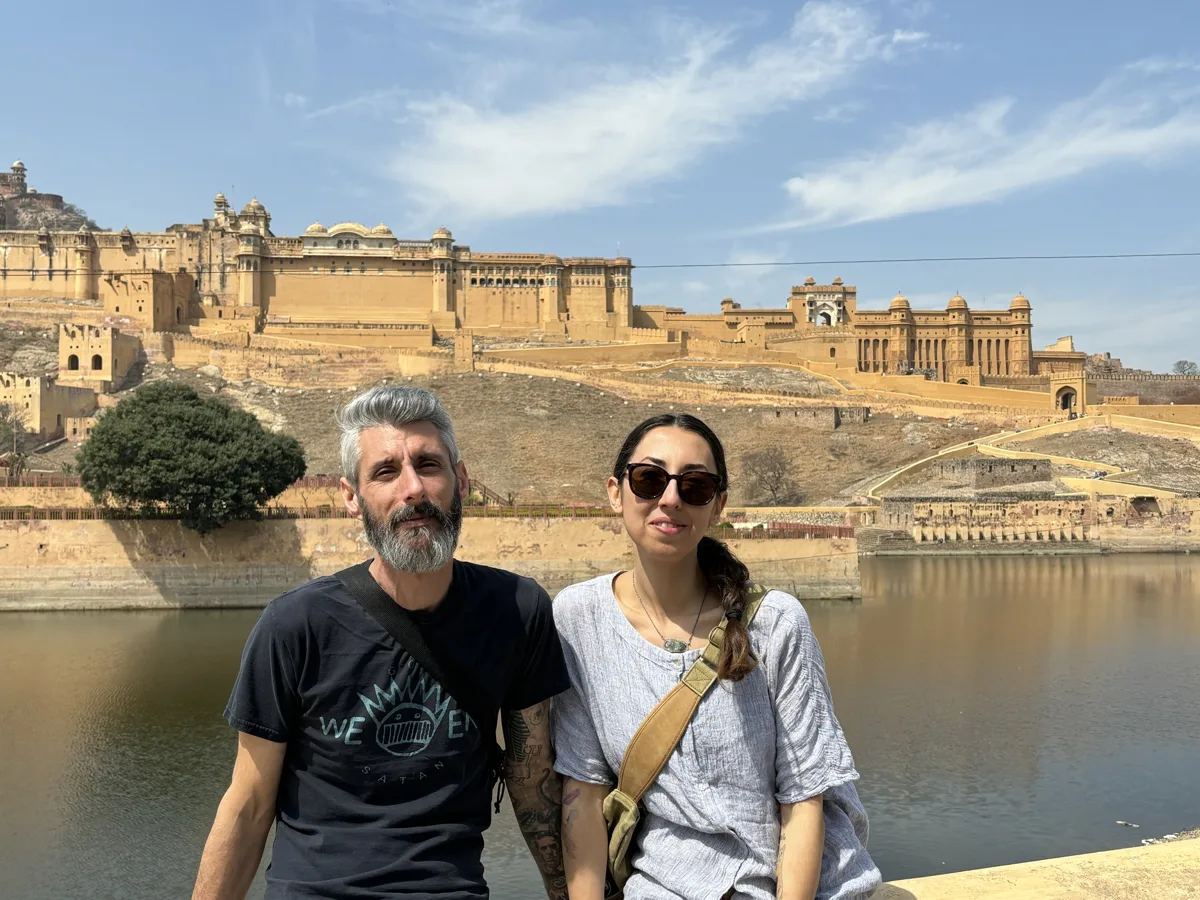
Just outside the city, Amber (Amer) Fort rises above Maota Lake with honey-coloured ramparts and ornate courtyards, including the mirrored Sheesh Mahal. It is part of the Hill Forts of Rajasthan UNESCO site. Go early in the morning, before the heat and the tour buses, and allow 2–3 hours. Jaigarh Fort, on the ridge above, is a good addition if you have time.
Hawa Mahal
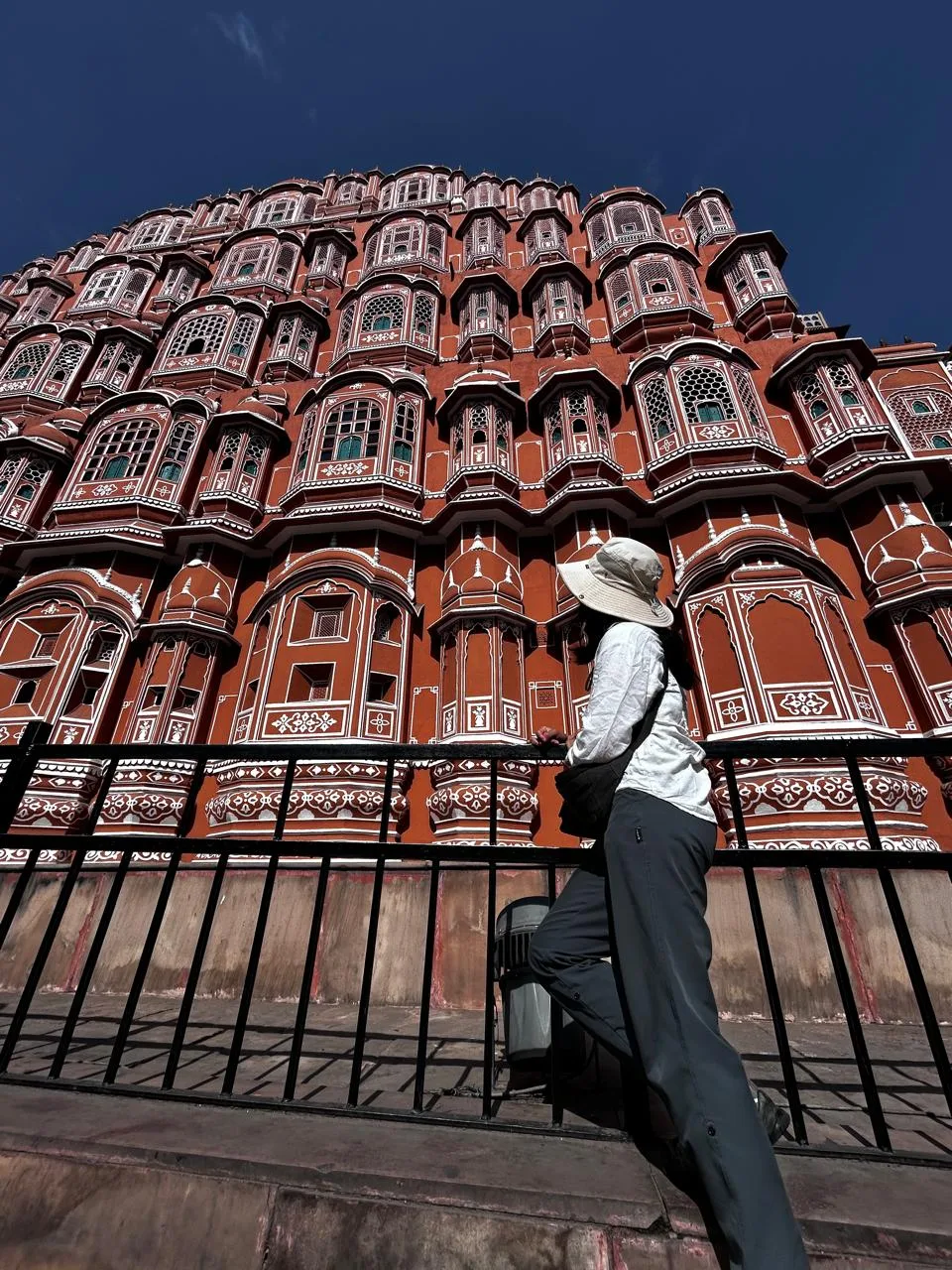
The Palace of Winds, built in 1799, is Jaipur's most photographed facade: a honeycomb of small windows from which royal women could watch street life unseen. The classic photo is from across the street; a short visit inside gives views over the old city.
City Palace
In the heart of the walled city, the City Palace is still partly the residence of Jaipur's royal family. Its museums hold textiles, arms and royal artefacts, and the Pritam Niwas Chowk courtyard with its four painted peacock doorways is a highlight. Allow about 1.5 hours.
Jantar Mantar
Next to the City Palace, Jantar Mantar is an 18th-century astronomical observatory of giant stone instruments, including one of the world's largest sundials. It is a UNESCO World Heritage Site, and a guide makes a big difference in understanding how the instruments work.
Markets and Shopping
- Johari Bazaar: jewellery, silver and gemstones.
- Bapu Bazaar: textiles, block-printed fabrics, leather slippers (mojari).
- Tripolia and Chandpole bazaars: brassware, bangles and everyday local shopping.
Jaipur is famous for block printing, blue pottery and gemstones. Buy gems only from established, reputable shops, and be wary of anyone proposing "export" deals.
What to Eat
- Dal baati churma: the classic Rajasthani meal of lentils, baked wheat balls and sweet crumbled wheat.
- Pyaaz kachori: a spiced onion-filled pastry, best for breakfast.
- Lassi: thick yogurt drinks served in clay cups.
- Ghevar: a lacy festive sweet, especially around the monsoon festivals.
- Laal maas: a fiery mutton curry for those who like heat.
More Things to Do
- Sunset from Nahargarh Fort, overlooking the city.
- A photo stop at Jal Mahal, the palace in Man Sagar Lake.
- Albert Hall Museum, lit up in the evening.
- Patrika Gate, a colourful modern gateway popular with photographers.
How Many Days in Jaipur?
- 1 day: Amber Fort in the morning, then the City Palace, Jantar Mantar and Hawa Mahal.
- 2 days: our recommendation, adding Nahargarh, the bazaars and a relaxed evening.
- 3 days: time for day trips, craft workshops or simply slowing down.
Travelling Between Agra and Jaipur
Agra and Jaipur are about 240 km apart, around 4.5–5 hours by private car. Two worthwhile stops sit on or near the route: Fatehpur Sikri, Akbar's abandoned capital about 40 minutes from Agra, and the Chand Baori stepwell at Abhaneri, a short detour closer to Jaipur. Trains also run between the two cities, but the road lets you add these stops. If you want to see the Taj Mahal from Jaipur without changing hotels, our Taj Mahal tour from Jaipur explains the same-day and overnight options.
From Jaipur, many travellers continue to Ranthambore for a tiger safari or deeper into Rajasthan to Udaipur, Jodhpur and Jaisalmer.
Best Time to Visit Jaipur
October to March is the best season, with warm days and cool evenings. April to June is very hot, and July to September brings monsoon showers. Festivals such as Diwali (usually October or November) and the kite-flying of Makar Sankranti in January add colour but also crowds.
Frequently Asked Questions
Two days is ideal for most visitors. One day covers the main sights at a brisk pace.
Early morning, before the heat and the largest crowds arrive.
The old walled city was painted pink in the 19th century, a colour associated with hospitality, and the tradition has been maintained.
About 240 km, or roughly 4.5–5 hours by road, not counting stops at Fatehpur Sikri or Abhaneri.
Yes. Jaipur, Delhi and Agra together make up the Golden Triangle.